

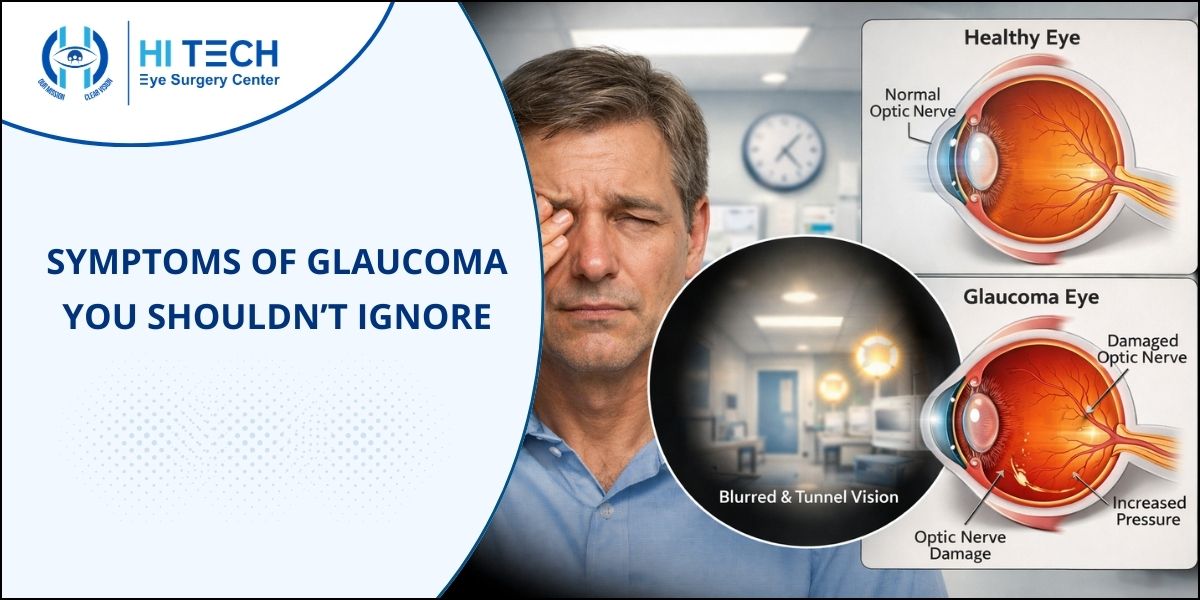
Symptoms of Glaucoma You Shouldn’t Ignore
Glaucoma is often called the “silent thief of sight”—and for good reason. It can slowly damage your vision without showing clear warning signs in the early stages. Many people don’t even realize they have glaucoma until they start losing vision permanently. That’s why understanding the early symptoms of glaucoma is extremely important for protecting your eyesight.
Let’s break it down in a simple, easy-to-understand way so you know exactly what to watch for
What is Glaucoma?
Glaucoma is an eye condition where increased pressure inside the eye (intraocular pressure) damages the optic nerve. This nerve is responsible for sending visual signals to your brain. Once damaged, the vision loss is irreversible—but early detection can help prevent further damage.
Early Symptoms of Glaucoma (Often Ignored)
In most cases, especially open-angle glaucoma, symptoms are so mild that people miss them completely.
1. Gradual Loss of Peripheral Vision
This is the most common early sign. You may not notice it immediately, but over time:
- You start losing side vision
- You feel like your vision is becoming “tunnel-like”
Many people mistake this for normal aging, which delays diagnosis.
2. Difficulty Seeing in Low Light
Do you find it harder to see in dim lighting or at night?
- Trouble adjusting to darkness
- Difficulty driving at night
This can be an early warning sign that your optic nerve is under stress.
3. Frequent Changes in Eyeglass Prescription
If your power keeps changing often, it may not just be a refractive issue.
- Blurry vision even with glasses
- Need for frequent eye check-ups
This could indicate underlying eye pressure problems.
Advanced Symptoms You Should Never Ignore
When glaucoma progresses, the symptoms become more noticeable—and more dangerous.
4. Severe Eye Pain
Sudden, intense eye pain is a serious symptom, especially in angle-closure glaucoma.
- Pain may spread to the head
- Often comes with nausea
This is a medical emergency.
5. Redness in the Eyes
Persistent redness, especially with pain or blurred vision, should never be ignored.
6. Blurred or Hazy Vision
You may experience:
- Cloudy vision
- Sudden loss of clarity
This can happen due to increased eye pressure.
7. Seeing Halos Around Lights
If you notice rainbow-colored circles around lights:
- Especially at night
- While driving
This is a classic symptom of glaucoma and needs immediate attention.
8. Sudden Vision Loss
In severe cases, glaucoma can cause:
- Rapid vision loss
- Blind spots
This damage is permanent if not treated immediately.
Who is at Higher Risk?
Some people are more likely to develop glaucoma:
- Age above 40
- Family history of glaucoma
- Diabetes or high blood pressure
- Long-term steroid use
- Eye injuries
If you fall into any of these categories, regular eye check-ups are a must.
When Should You See a Doctor?
You should consult an eye specialist immediately if you notice:
- Any loss of side vision
- Eye pain or redness
- Halos around lights
- Sudden blurry vision
Even if you don’t have symptoms, it’s recommended to get your eyes checked once a year, especially after 40.
Why Early Detection Matters
Glaucoma damage cannot be reversed—but it can be controlled. With early diagnosis:
- Eye drops can reduce pressure
- Laser treatments can help
- Surgery may prevent further damage
Ignoring symptoms can lead to permanent blindness, which is completely preventable with timely care.
Visit Hi Tech Eye Surgery Center for Glaucoma Treatment in Pune
If you are experiencing any of these symptoms, seeking expert care is crucial. Hi Tech Eye Surgery Center in Pune offers advanced diagnosis and treatment for glaucoma, including medical management, laser therapy, and glaucoma surgery. With experienced ophthalmologists and modern technology, the center focuses on early detection and effective treatment to preserve your vision. Whether you need routine screening or a glaucoma operation in Pune, Hi Tech Eye Surgery Center provides comprehensive eye care tailored to your needs.
FAQs
1. Can glaucoma be cured completely?
No, glaucoma cannot be cured, but it can be controlled with proper treatment.
2. Is glaucoma painful?
Open-angle glaucoma is usually painless, but angle-closure glaucoma can cause severe pain.
3. How often should I get my eyes checked?
Once a year after age 40, or more frequently if you are at high risk.
4. Can glaucoma lead to blindness?
Yes, untreated glaucoma can cause permanent blindness.
5. Are there any preventive measures?
Regular eye check-ups, controlling diabetes and blood pressure, and avoiding unnecessary steroid use can help reduce risk.


