

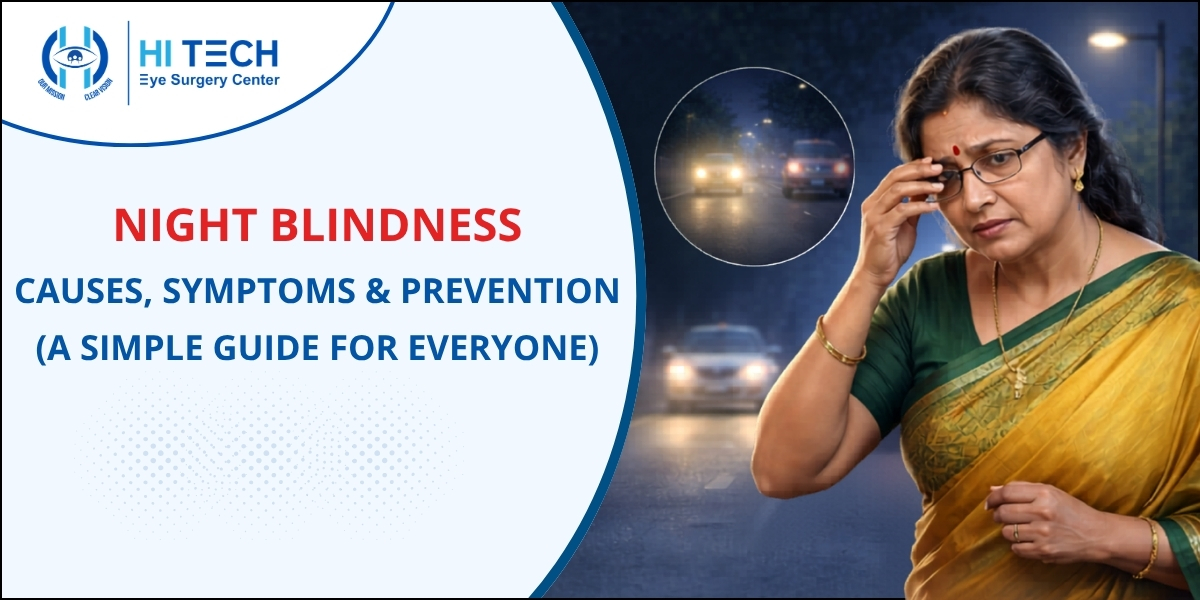
Night Blindness: Causes, Symptoms & Prevention Tips
Struggling to see clearly at night or in low-light conditions? You might be experiencing night blindness, medically known as nyctalopia. This condition doesn’t mean you’re completely blind at night—but it can make driving, walking, or recognizing faces in dim light difficult.
In this blog, we’ll break down everything in a simple, easy-to-understand way—so you can recognize the signs early and take action.
What is Night Blindness?
Night blindness is a condition where your eyes find it difficult to adjust to low light or darkness. People with this condition may see fine during the day but struggle significantly at night.
Common Causes of Night Blindness
Understanding the cause is the first step toward proper treatment.
1. Vitamin A Deficiency
Vitamin A plays a crucial role in maintaining healthy vision. A deficiency can impair your ability to see in dim light.
2. Cataracts
Clouding of the eye lens reduces the amount of light reaching the retina, making night vision worse.
3. Retinitis Pigmentosa
A genetic disorder that gradually damages the retina and affects night vision early on.
4. Glaucoma Medications
Certain medications used for glaucoma may constrict the pupil, reducing light intake.
5. Severe Nearsightedness (Myopia)
High myopia can also make it harder to see clearly at night.
Symptoms to Watch Out For
If you notice any of the following, it might be time for an eye check-up:
- Difficulty driving at night
- Trouble adjusting from bright to dark environments
- Blurry or dim vision in low light
- Increased sensitivity to glare
- Frequent tripping or bumping into objects in dim lighting
How is Night Blindness Diagnosed?
An eye specialist may perform:
- Vision tests
- Retina examination
- Blood tests (to check Vitamin A levels)
For accurate diagnosis and treatment, visiting a trusted eye clinic is essential.
Prevention Tips for Better Night Vision
1. Maintain a Healthy Diet
Include Vitamin A-rich foods like:
- Carrots
- Spinach
- Sweet potatoes
- Eggs
2. Regular Eye Check-ups
Early detection can prevent serious complications.
3. Manage Existing Eye Conditions
Conditions like cataracts or glaucoma should be treated promptly.
4. Avoid Driving at Night (if symptoms are severe)
Safety should always come first.
When Should You See a Doctor?
If your night vision suddenly worsens or interferes with daily life, don’t ignore it. Early treatment can make a big difference.
For expert consultation and advanced eye care in Pune, consider visiting
Hi Tech Eye Surgery Center, known for modern diagnostic tools and experienced specialists.
Why Choose the Right Eye Care Center in Pune?
When searching online, many people look for:
- Best eye hospital in Pune
- Night blindness treatment near me
- Eye specialist for low vision Pune
Choosing a well-equipped center ensures:
- Accurate diagnosis
- Advanced treatment options
- Personalized care
Final Thoughts
Night blindness may seem minor at first, but it can affect your safety and quality of life. The good news? In many cases, it’s treatable or preventable with the right care.
Take your eye health seriously—because clear vision doesn’t just matter in daylight.
FAQs on Night Blindness
1. What is night blindness?
Night blindness is a condition where a person has difficulty seeing in low-light or dark environments.
2. What causes night blindness?
Common causes include Vitamin A deficiency, cataracts, retinal disorders, and severe myopia.
3. Is night blindness curable?
It depends on the cause. Some cases (like Vitamin A deficiency) are treatable, while genetic conditions may be managed but not cured.
4. When should I see an eye specialist?
If you notice difficulty seeing at night or adjusting to darkness, you should consult an expert at Hi Tech Eye Surgery Center.
5. How can I prevent night blindness?
Maintain a healthy diet rich in Vitamin A, get regular eye check-ups, and treat underlying eye conditions early.


