

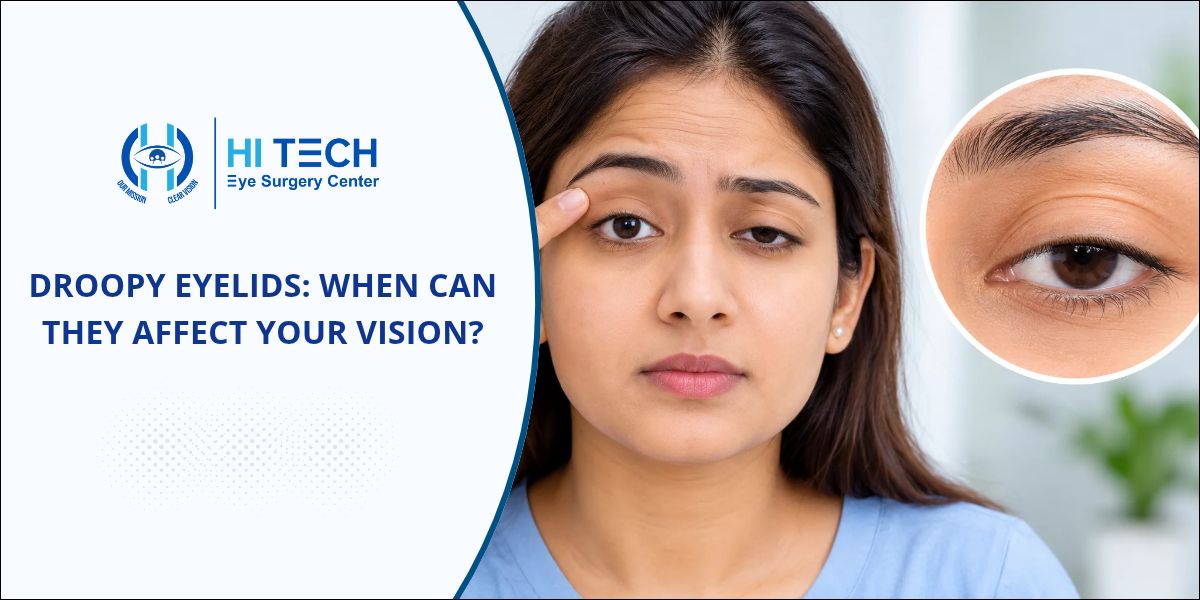
Droopy eyelids are more than just a cosmetic concern. In some people, they can affect eyesight and make everyday activities like reading, driving, working on a computer, or watching television difficult. This condition is medically known as ptosis. It occurs when the upper eyelid falls lower than its normal position.
Droopy eyelids can affect one eye or both eyes. Some people are born with this condition, while others develop it with age or due to certain medical conditions. Although mild drooping may not cause major problems, severe droopy eyelids can block part of the pupil and affect normal vision.
Understanding the causes, symptoms, and treatment options can help you identify when medical attention is needed. If you notice changes in your eyelid position or vision, an eye specialist can help determine the reason.
What Are Droopy Eyelids (Ptosis)?
Ptosis is a condition in which one or both upper eyelids droop lower than their normal position. Normally, the upper eyelid covers a small portion of the coloured part of the eye. However, when the eyelid muscles become weak or do not work properly, the eyelid may fall lower than usual.
In some cases, the eyelid may cover part of the pupil, reducing the amount of light entering the eye.
Droopy eyelids can develop at any age. Children may be born with ptosis, while adults may experience it because of ageing, muscle weakness, nerve problems, or an injury.
Common Causes of Droopy Eyelids
There are several reasons why a person may develop droopy eyelids. Some of the common causes include:
Ageing
Ageing is one of the most common causes of droopy eyelids. As we grow older, the muscles and tissues that support the eyelids can become weak or stretched. This may cause the upper eyelids to gradually fall.
Weak Eyelid Muscles
A muscle called the levator muscle helps lift the upper eyelid. If this muscle becomes weak or loses its normal function, the eyelid may start drooping.
Nerve Problems
Certain nerve-related conditions can affect the muscles responsible for eyelid movement. This may result in sudden or gradual eyelid drooping.
Eye Injury or Previous Surgery
An injury around the eye or certain previous eye surgeries may affect the muscles or tissues that support the eyelid.
Congenital Ptosis
Some children are born with droopy eyelids because their eyelid muscles have not developed properly. This condition is known as congenital ptosis and may need early medical attention, especially if it affects vision development.
When Can Droopy Eyelids Affect Your Vision?
Not every case of ptosis affects eyesight. However, when the eyelid droops significantly, it can block the upper part of the field of vision.
Here are some situations where droopy eyelids may interfere with daily activities.
When the Eyelid Covers the Pupil
If the upper eyelid falls over the pupil, it can block light from entering the eye properly. This may make it difficult to see clearly.
Difficulty Reading
People with droopy eyelids may find reading books, newspapers, or mobile screens uncomfortable because the eyelid blocks part of their vision.
Problems While Driving
Severe droopy eyelids can reduce the upper field of vision. This can make it harder to notice traffic signals, road signs, and objects above the normal line of sight.
Frequent Headaches and Eye Strain
Some people unconsciously raise their eyebrows or tilt their heads backward to see clearly. Doing this repeatedly can cause forehead discomfort, headaches, and eye strain.
Vision Problems in Children
Droopy eyelids in children need special attention. If the eyelid covers the pupil, it may interfere with normal vision development and increase the risk of lazy eye (amblyopia).
Parents should consult an eye specialist if they notice that their child’s eyelid is lower than normal.
Symptoms You Should Not Ignore
Droopy eyelids may develop slowly, so some people do not notice the changes immediately.
Common symptoms include:
- One or both upper eyelids appearing lower than usual.
- Difficulty keeping the eyes fully open.
- Reduced upper field of vision.
- Frequent eyebrow raising to improve vision.
- Headaches due to constant forehead muscle strain.
- Difficulty reading or using digital screens.
- Tired-looking or uneven eyes.
- Difficulty seeing clearly when looking straight ahead or upward.
If you experience sudden eyelid drooping, especially with double vision, unequal pupils, severe headache, or weakness, seek emergency medical attention. These symptoms can sometimes indicate a serious neurological problem.
How Are Droopy Eyelids Diagnosed?
An eye specialist will examine your eyelids, eye muscles, and overall vision to identify the cause of ptosis.
The examination may include:
- Eyelid Position Assessment: The doctor checks how low the upper eyelid sits and whether it covers the pupil.
- Muscle Function Test: The movement and strength of the eyelid muscles are examined.
- Vision Testing: Eye tests help determine whether droopy eyelids are affecting your vision.
- Eye and Nerve Examination: Depending on the symptoms, the doctor may recommend additional tests to identify nerve-related or other medical conditions.
The diagnosis helps the doctor decide whether treatment is necessary and which option is suitable.
What Are the Treatment Options for Droopy Eyelids?
The treatment depends on the cause, severity, and effect of the condition on vision.
- Observation and Regular Eye Check-ups : Mild ptosis that does not affect vision may only require regular monitoring by an eye specialist.
- Prescription Eye Drops : In selected adults with certain types of acquired ptosis, prescription eye drops may temporarily help lift the eyelid. They are not suitable for every patient and should only be used under medical guidance.
- Ptosis Surgery : When droopy eyelids significantly affect vision or daily activities, surgery may be recommended.
Ptosis surgery aims to improve the position of the upper eyelid by tightening or adjusting the muscles responsible for lifting it. The surgical technique depends on the patient’s eyelid muscle function and the severity of ptosis. If you are searching for droopy eyelid treatment in Pune, consult an experienced eye specialist to understand the available treatment options.
- Treatment of the Underlying Condition : If ptosis is caused by a nerve problem or another medical condition, treating the underlying cause may be an important part of management.
Can Droopy Eyelids Be Prevented?
Age-related droopy eyelids cannot always be prevented. However, taking proper care of your eyes may help protect the surrounding tissues.
Some useful habits include:
- Avoid rubbing your eyes frequently.
- Protect your eyes from injuries.
- Follow proper eye care and hygiene practices.
- Attend regular eye check-ups.
- Manage medical conditions with proper medical advice.
- Seek medical attention if you notice sudden changes in eyelid position.
Remember, home remedies cannot correct the weakened muscles responsible for ptosis.
When Should You Visit an Eye Specialist?
You should consult an eye specialist if your eyelids start drooping, your vision becomes unclear, or you experience difficulty keeping your eyes open.
Do not ignore droopy eyelids in children, as early diagnosis is important for healthy vision development.
If you notice sudden drooping, particularly with other neurological symptoms, seek emergency medical care instead of waiting for a routine appointment.
Early diagnosis can help identify the cause and prevent possible vision-related complications.
Get Expert Eye Care at Hi Tech Eye Surgery Center, Pune
If you are experiencing droopy eyelids, reduced vision, or difficulty keeping your eyes open, getting the right medical advice is important. Hi Tech Eye Surgery Center, provides eye care services to help patients understand and manage different eye conditions. Whether you are looking for an eye specialist in Pune, an evaluation for ptosis, or guidance about droopy eyelid surgery in Pune, consulting an experienced eye doctor can help you understand the right treatment approach. Timely eye examinations can help identify problems early and protect your vision. Visit Hi Tech Eye Surgery Center for professional eye care and guidance based on your individual needs.
Frequently Asked Questions (FAQs)
- What is the medical name for droopy eyelids?
The medical name for droopy eyelids is ptosis. It occurs when the upper eyelid falls lower than its normal position.
- Can droopy eyelids affect eyesight?
Yes. Severe droopy eyelids can cover part of the pupil and block the upper field of vision.
- Is droopy eyelid surgery necessary?
Not always. Surgery may be recommended when ptosis affects vision, daily activities, or eye development in children.
- Can droopy eyelids develop with age?
Yes. Ageing can weaken or stretch the muscles and tissues that support the upper eyelids.
- Which doctor should I consult for droopy eyelids?
You should consult an ophthalmologist or an eye specialist experienced in evaluating eyelid conditions.

