

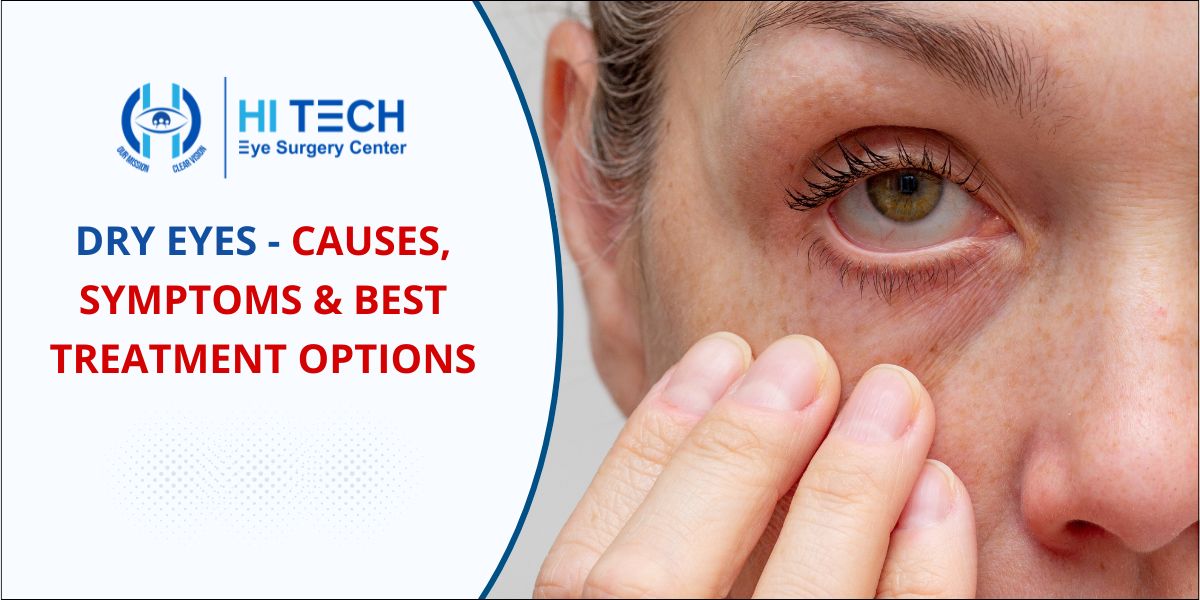
Dry Eyes: Causes, Symptoms & Best Treatment Options
Dry eyes are more than just a minor irritation. If your eyes often feel gritty, tired, burning, or unusually watery, you may be experiencing dry eye disease. It can affect people of all ages, especially those who spend long hours on computers and smartphones, work in air-conditioned environments, or wear contact lenses.
The good news is that dry eyes can usually be managed effectively once the underlying cause is identified. Understanding the symptoms and available treatment options can help you protect your eye health and get timely care.
What Are Dry Eyes?
Dry eye occurs when your eyes do not produce enough tears or when tears evaporate too quickly. Tears are essential for keeping the surface of the eye smooth, comfortable, and protected.
When the tear film becomes unstable, the eyes may become irritated and uncomfortable. In some cases, untreated dry eyes can interfere with reading, driving, working on screens, or other everyday activities.
Common Causes of Dry Eyes
Several factors can contribute to dry eyes, including:
1. Excessive Screen Time
Long periods of computer, tablet, or smartphone use can reduce how often you blink. Fewer blinks mean less moisture is spread across the surface of the eyes.
2. Air Conditioning and Environmental Factors
Air-conditioned rooms, fans, dry weather, dust, smoke, and pollution can increase tear evaporation and make dry eye symptoms worse.
3. Contact Lens Use
Wearing contact lenses for extended periods may contribute to dryness and discomfort, particularly when proper cleaning and wearing guidelines are not followed.
4. Age-Related Changes
Tear production can naturally decrease with age. Dry eyes therefore become more common as people get older.
5. Certain Medications
Some medications, including certain allergy medicines, antidepressants, blood-pressure medicines, and others, may contribute to dry eyes. Never stop prescribed medication without consulting your doctor.
6. Eyelid or Tear Gland Problems
Conditions affecting the eyelids or the glands responsible for producing the oily layer of tears can cause tears to evaporate too quickly.
Symptoms of Dry Eyes
Dry eye symptoms can vary from person to person. Common signs include:
- Burning or stinging sensation
- Gritty or sandy feeling in the eyes
- Redness
- Excessive watering
- Blurred or fluctuating vision
- Eye fatigue
- Sensitivity to light
- Difficulty wearing contact lenses
- Feeling that something is stuck in the eye
Interestingly, watery eyes can also be a symptom of dry eyes. Irritation may trigger the eyes to produce reflex tears, but these tears may not provide the stable, protective tear film that the eye needs.
When Should You See an Eye Doctor?
Occasional dryness may improve with simple lifestyle changes. However, persistent or worsening symptoms should not be ignored.
You should consider an eye examination if dry eyes are affecting your work, reading, sleep, or daily activities, or if you experience persistent redness, pain, light sensitivity, or changes in vision.
A comprehensive eye examination can help determine whether the problem is caused by tear deficiency, excessive evaporation, eyelid issues, contact lens use, environmental factors, or another eye condition.
Best Treatment Options for Dry Eyes
Treatment depends on the severity and underlying cause of the condition.
Artificial Tears
Lubricating eye drops are commonly recommended for mild to moderate dry eye. Preservative-free artificial tears may be preferred when drops are needed frequently.
Warm Compresses and Eyelid Care
Warm compresses and appropriate eyelid hygiene may help improve the function of the oil-producing glands around the eyelids, particularly in people with evaporative dry eye.
Take Regular Screen Breaks
Follow the 20-20-20 rule while using digital screens: every 20 minutes, look at something around 20 feet away for at least 20 seconds. Remembering to blink fully and frequently can also help.
Manage Your Environment
Avoid direct exposure to fans and air-conditioner vents. Using a humidifier in very dry environments and wearing protective eyewear in windy or dusty conditions may reduce irritation.
Medical Treatment
If basic measures are not enough, an ophthalmologist may recommend prescription eye drops or other treatments depending on the underlying cause. In some cases, treatment may focus on eyelid inflammation or blocked oil glands.
Visit Hi Tech Eye Surgery Center for the best eye care in Pune
If you are looking for dry eye treatment in Pune, a detailed eye examination can help identify the reason behind persistent dryness rather than simply treating the symptoms.
Hi Tech Eye Surgery Center provides comprehensive eye care and evaluation for dry eye symptoms in Pune. The center uses modern diagnostic technology to assess different eye conditions and can guide patients toward appropriate treatment based on their individual needs.
People searching for a dry eye specialist in Pune, dry eye doctor in Pune, or eye hospital for dry eye treatment in Pune should consider getting a professional evaluation, especially when symptoms are persistent or affecting vision and daily comfort.
Simple Tips to Prevent Dry Eyes
You can reduce the risk of dry eye symptoms by:
- Taking regular breaks from digital screens
- Blinking frequently while working on a computer
- Staying adequately hydrated
- Avoiding direct fan or air-conditioner airflow
- Wearing sunglasses outdoors
- Cleaning contact lenses properly
- Getting regular eye examinations when recommended
FAQs
1. Can excessive screen time cause dry eyes?
Yes. Prolonged screen use can reduce blinking and increase tear evaporation, contributing to dry eye symptoms.
2. Can dry eyes cause watery eyes?
Yes. Eye irritation caused by dryness can trigger reflex tearing, resulting in watery eyes.
3. Are artificial tears safe for dry eyes?
Lubricating eye drops are commonly used for dry eyes. Your eye doctor can recommend the most suitable type based on your symptoms.
4. Can dry eyes affect vision?
Yes. Dry eyes can cause temporary or fluctuating blurred vision, particularly during prolonged reading or screen use.
5. When should I see a doctor for dry eyes?
If symptoms are frequent, persistent, painful, or affecting your vision and daily activities, an eye examination is recommended.


